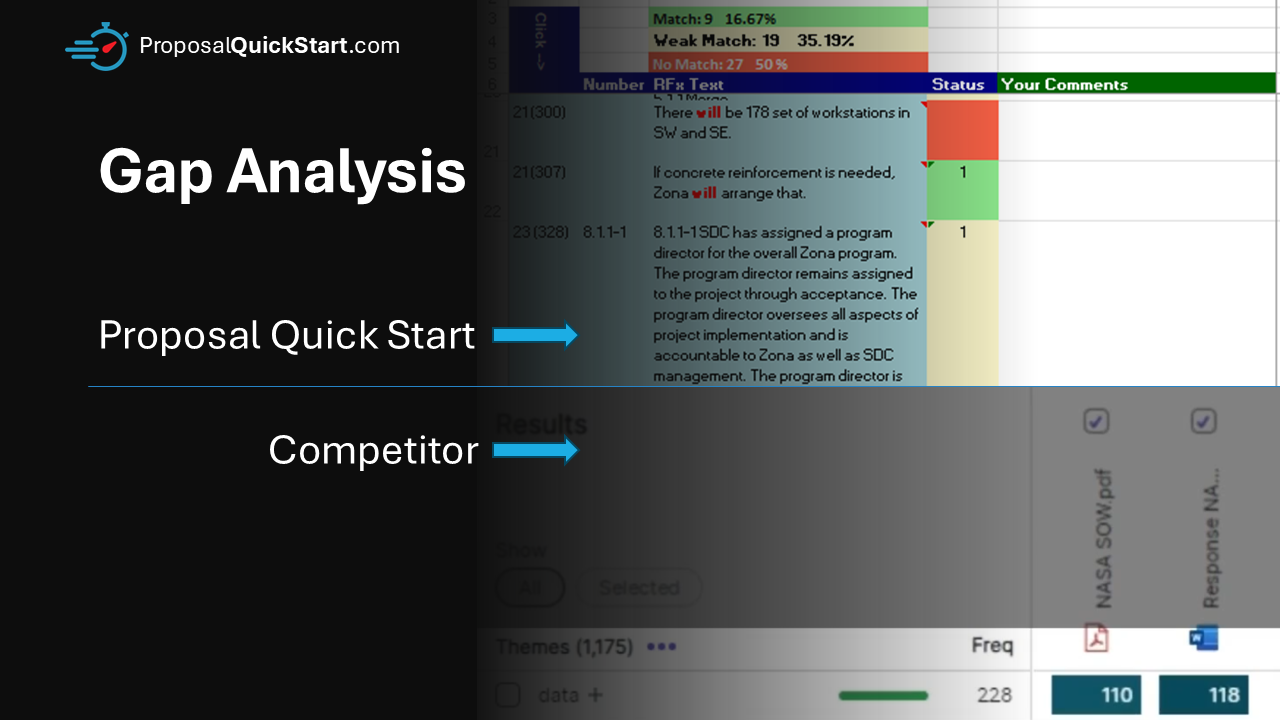
𝗧𝗵𝗲 𝗚𝗮𝗽 𝗔𝗻𝗮𝗹𝘆𝘀𝗶𝘀 𝗗𝗶𝗳𝗳𝗲𝗿𝗲𝗻𝗰𝗲
The term "Gap Analysis" is used differently across proposal software. In Proposal Quick Start (PQS), it means analyzing the vector semantic relationship between requirements and responses. The competitor, it means analyzing the high-level thematic consistency between two documents.
This difference in focus determines whether you catch a genuine compliance failure or just get a generic consistency report.
1. Proposal Quick Start (PQS): True Requirements Gap Analysis (RGA)
What PQS Analyzes:
PQS is designed to compare the precise textual content of two specific, related text blocks:
The Requirement: The specific, discrete paragraph in the Request for Proposal (RFP) that defines requirements.
The Response: The specific, discrete paragraph in your Draft Proposal that is supposed to be the answer/solution.
How the Analysis Works: PQS doesn't just look for shared keywords. It analyzes the semantic meaning of the requirement and the semantic meaning of the response, checking for a strong, relevant match.
The Result: PQS flags "Missing Responses" and "Weak Matches." This is the ultimate tool for finding "boilerplate blunders", where a writer used a beautifully written answer from a previous proposal that simply doesn't address the specific nuance of the current requirement.
* 2. The Competitor's Approach: Theme Matching
Competitor software that claims to offer a "Gap Analysis" often relies on a different, less granular approach, which is more accurately defined as Theme Matching or Thematic Consistency Analysis.
What Theme Matching Analyzes: Theme matching is designed to analyze the high-level similarity across two large documents (e.g., Document A and Document B). It checks for consistent themes, terminology, and high-frequency concepts.
How the Analysis Works (High-Level Consistency): The analysis is focused on consistency, not compliance. For example:
Scenario: "Our solution includes advanced cybersecurity measures, including encryption, multi-factor authentication, and regular security audits."
Theme Matching Result: The tool reports that the two documents are highly consistent and thematically aligned. It gives you a "green light."
The Compliance Failure: The tool misses that the actual proposal response to the specific requirement only discusses "security," completely omitting the "cloud-native" aspect. Since the theme of security is present, the tool is satisfied.
Ultimately, PQS offers a true audit function designed to ensure you not only have an answer, but that the answer is correct and compliant with the textual content of the requirement. Theme matching is useful, but it cannot guarantee compliance, it only verifies that you're talking about the same general topics.